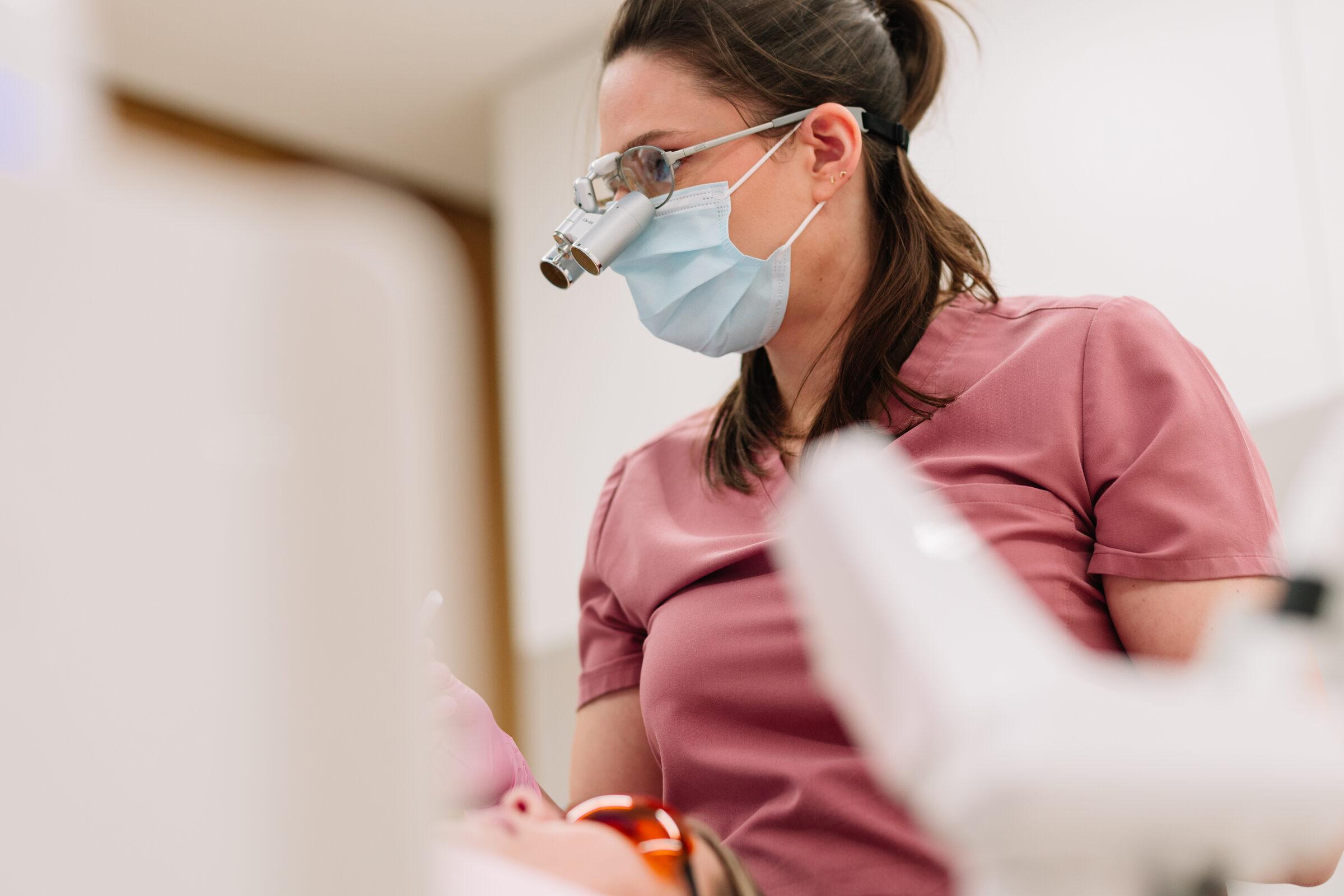


Modern endodontics. Minimal discomfort.
A short summary of what happens during root canal treatment
The tooth is thoroughly numbed with local anaesthetic, the infection is cleaned from the canals, and you watch your favourite show on our ceiling-mounted TV while we work. Afterwards, the tooth may feel tender for a few days. That is normal and settles with ordinary painkillers. Most patients go back to work the same day, and the pain that brought them in is usually gone before they leave the chair. That is the picture of modern root canal treatment. If you have just been told you need one, or a toothache is telling you one is coming, here is exactly what to expect at Vere Dental in Battersea, before, during and after.
What is root canal treatment?
Root canal treatment, formally known as endodontic treatment, aims to save a tooth by cleaning the crown and the nerve canals within its roots. Using irrigants and precise shaping techniques, we remove bacteria until the canals are as free of infection as possible. Treatment is typically needed when bacteria have invaded the nerve and blood vessels of the tooth, causing infection, inflammation, and eventually the death of the tooth, a process your dentist may refer to as necrosis. Trauma and certain inflammatory conditions can also make root canal treatment necessary. The treatment has a fearsome reputation it no longer deserves. The pain people remember from root canals is usually the pain that came before treatment: the severe toothache of an infected nerve. Modern local anaesthetic, precise techniques and an unhurried appointment mean the treatment itself is, for most patients, unremarkable.
Advantages
- Saves the natural tooth, preserving root structure and surrounding bone
- Virtually pain-free under modern local anaesthesia
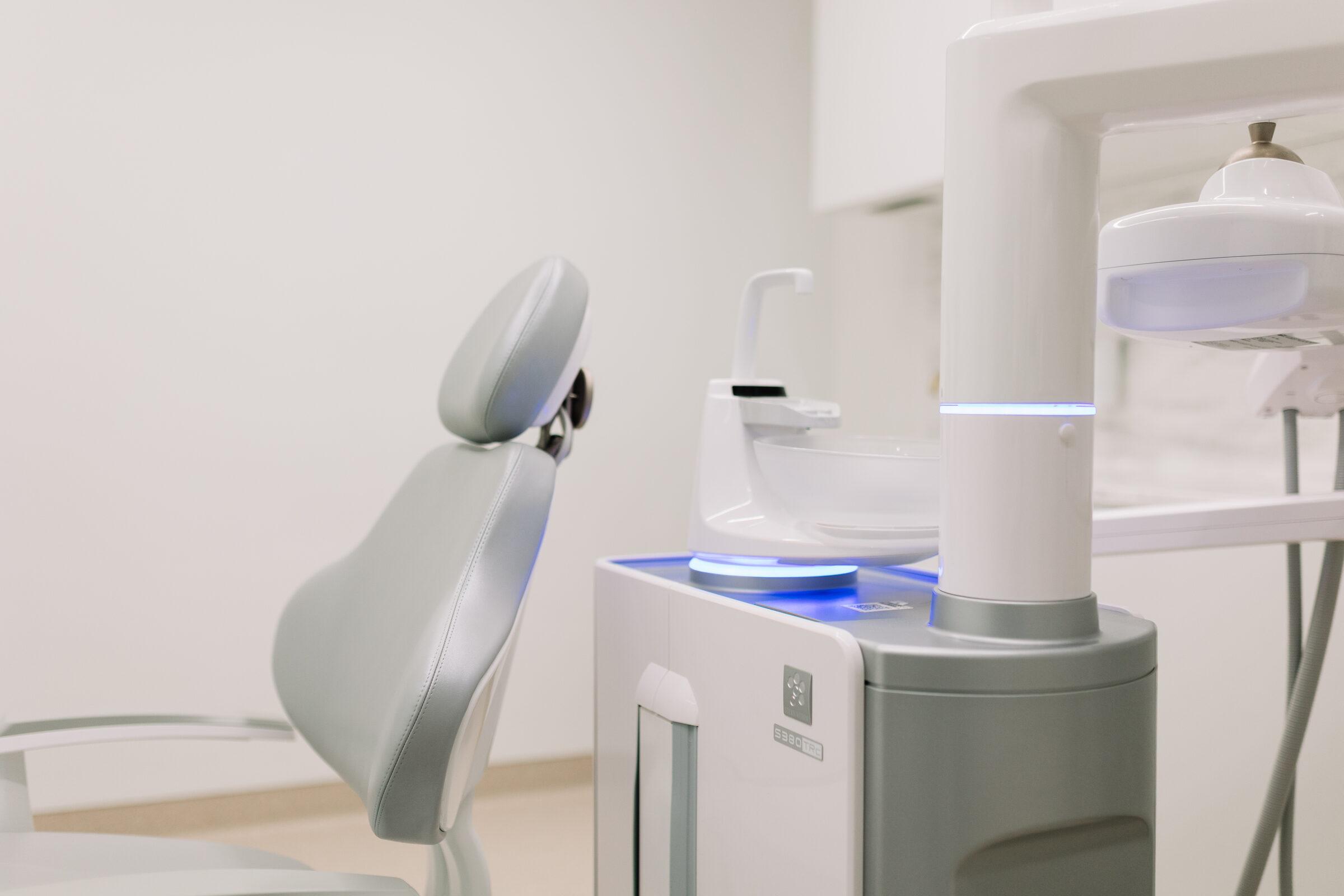
- Ceiling-mounted TV for your comfort throughout the procedure
- Biocompatible sealing materials that support the health of surrounding bone
- Single or double appointment options depending on complexity
- Significantly less costly than tooth replacement alternatives
Considerations
- A porcelain crown is recommended after treatment to protect against fracture
- Some post-operative tenderness is expected for a few days
- Teeth with severe damage or fractures may not be suitable for root canal
- Re-treatment may be required in rare cases where previous treatment has failed
- Complex cases may require referral to a specialist endodontist
Signs you might need one
Your tooth usually tells you before we do. Watch for:
Lingering sensitivity to heat, a twinge that lingers long after the coffee is gone
Pain when biting or chewing, or a tooth that feels "high"
Spontaneous ache or throbbing, especially at night
Swelling in the gum near the tooth, sometimes with a bad taste
A tooth that is darkening, a sign the nerve inside has died
A pimple-like spot on the gum that comes and goes
If you have swelling in your face or jaw, difficulty opening your mouth or swallowing, or a fever alongside toothache, call us the same day. These can indicate a spreading infection that needs prompt attention.
For ordinary toothache, get in touch, as we may be able to help you the same day. Find out about our emergency appointments. You do not need to be a registered patient to call.
Your appointment, step by step
Here is what happens, in order, on the day:
X-rays and assessment. We begin with digital X-rays to understand the tooth's condition: the number and shape of its canals, and how far the infection has reached.
Numbing. The area is thoroughly numbed with local anaesthetic. We do not begin until you are comfortable. If you feel anything, you raise a hand and we stop and top up. IV sedation is available for anxious patients, which keeps you conscious but deeply relaxed, with little memory of the procedure afterwards.
Isolating the tooth. A protective sheet keeps the tooth dry and clean during treatment.
Cleaning and shaping. We carefully clean, drain and shape the canals, removing the infected tissue and bacteria with irrigants and precise instruments.
Medication, if needed. If the infection is severe, we place medication inside the tooth to clear it before sealing. This is what makes some treatments a two-appointment plan.
Sealing. The canals are sealed with biocompatible filling material that supports the health of the surrounding bone.
The white filling. A white filling restores the tooth, protecting it until it is ready for a crown.
One appointment or two? Most straightforward root canal treatments at Vere Dental are completed in a single appointment. Teeth with more complex canal systems, severe infections, or existing root fillings that need dismantling carefully, usually molars, may take two or more appointments.
Will it hurt?
It rarely does during treatment, with two honest footnotes below.
The anaesthetic we use is very effective, and we allow time for it to work fully. During the appointment, you should feel pressure and movement, not pain; most patients watch the ceiling TV and let their mind wander.
The first footnote: if the nerve is acutely inflamed, it can occasionally take a little longer to get the tooth completely numb.
The second footnote: if you have been putting off treatment because of anxiety, ask us about IV sedation. You remain conscious and calm throughout and remember little of it afterwards.
Afterwards, the tooth and the gum around it can feel tender for two or three days, like a bruise being pressed on. Ordinary painkillers manage it well if you need them, though many of our patients find they don't. It eases steadily.
Crucially, the deep, sleep-losing ache that came before treatment is gone.
We cover the most common worries in our article on root canal myths and reality.
Aftercare and the crown
For the first few days:
Eat on the other side of your mouth and avoid very hard foods on the treated tooth
Brush and clean normally, gently but thoroughly around the area
Take painkillers as advised if the tooth feels tender
Call us if the tenderness worsens after the first few days, or if the bite feels high. A small adjustment takes minutes.
At around three months, once the tooth has healed, we prepare it for a porcelain crown. This is not an optional extra: a root-treated tooth is more brittle than a living tooth, and a crown protects it against fracture the way a helmet protects a head. This is called cuspal coverage. Without it, a tooth that has been root treated is quite likely to crack under the load of chewing, and a cracked tooth cannot always be saved. The crown is made to match your other teeth and sits indistinguishably among them.
Research consistently shows that root-treated teeth last much longer with a crown than without one.
Saving your natural tooth or taking it out
Keeping your own tooth is most often the best outcome. Replacing a lost tooth with an implant or bridge is more complex, more costly and more time-consuming than preserving the natural root, if the natural tooth can be kept.
We will tell you honestly if a tooth cannot be saved. Teeth with severe damage or vertical fractures may not be suitable for root canal treatment, and continuing treatment on a hopeless tooth is not in your interest. But that decision is made on evidence, explained in plain language, and you make it with us.
Complex cases and referrals
While we don't currently have an in-house endodontist, our experienced team handles the majority of root canal treatments confidently. Where a complex case needs specialist input, such as a difficult canal anatomy or re-treating a tooth treated elsewhere years ago, we refer to trusted specialist partners who share our standard of care. The referral is made for you, not handed to you.
What that means in practice: we arrange the referral, forward your X-rays and notes, and coordinate with the specialist's practice so you are not repeating your story twice. You pay the specialist practice directly for their part of the treatment, and you return to us for the filling and crown. Your tooth stays under our care throughout.
Who treats you
Your root canal treatment is carried out by Dr Amandine Beke, principal dentist and founder of Vere Dental, whose postgraduate training spans advanced restorative dentistry, aesthetic medicine and orofacial pain. She is supported by our dental nursing team, including Lina Zahid. Dr Beke has particular experience in treating nervous patients, and nothing about the appointment is rushed. The ceiling TV, the time taken to get you properly numb and the pace of the appointment are all part of the treatment.
Toothache won't wait, and neither should you. Call us on 020 4505 6446, as we may be able to help you the same day.
“Cannot recommend Vere Dental enough. All the staff are lovely and welcoming and the facilities are excellent. Amandine is lovely, knowledgeable, and made the whole experience completely pain-free. Would highly recommend!”
Elizabeth
Google Reviewer


Sedation available
for your comfort.
If dental anxiety has been holding you back, we offer IV sedation to help you feel completely relaxed throughout your appointment. You'll remain conscious but calm, with little memory of the procedure.
Learn About SedationOur Team
Dedicated clinicians,
exceptional care.

Principal Dentist & Founder
Dr. Amandine Beke

Dental Nurse
Lina Zahid
Popular Questions
A quiet space in Battersea.
Monday 08:15 – 17:15
Tuesday 08:15 – 19:30
Wednesday 08:15 – 17:15
Thursday 08:15 – 18:00
Friday 08:15 – 18:00
Saturday 08:00 – 14:00
Sunday Closed
