

Why September Is the Perfect Time for a Dental Check-Up
The start of a new school year resets everything: new shoes, new routine, new lunchbox. It is also the ideal moment to book your child's dental check-up—and for good reason. Tooth decay remains the most common reason children in the UK miss school for medical reasons, and a quick check in September means any problems are caught while they are still small, painless and easy to fix.
At Vere Dental in Battersea, our children's appointments are designed around your child's comfort first. A back-to-school check takes about 30 minutes, and it is as much about building a happy relationship with the dentist as it is about looking at teeth.
Get the routine right early and your child carries it for life.
What a Children's Check-Up Actually Involves
Parents sometimes expect a scaled-down version of an adult check-up. In practice, a children's examination is its own thing, built around how your child feels in the chair:
1. Time to settle in.
Nothing happens in a rush. We let your child look around, meet the dentist, and get comfortable—sometimes the whole first visit is simply "a ride in the chair" and a chat, and that is a good visit. Confidence is the foundation of everything that follows.
2. A gentle examination.
The dentist looks at your child's teeth, gums and the way their bite is developing—counting teeth, checking for early decay, and watching how the adult teeth are coming through behind the baby ones.
We also look at the soft tissues and the growth pattern of the jaws. Furthermore, we check the skin around the mouth as children are prone to peri-oral eczema and impetigo.
3. A look at habits and development.
How is the bite forming? Are there signs of thumb-sucking effects, crowding, or teeth coming through in unexpected places?
Children's mouths change remarkably fast, and a check every six months from the age of 5 to 6 years old means we spot the changes as they happen.
4. Fluoride varnish, if recommended.
A quick, painless protective coating painted onto the teeth—recommended by dentists across the UK for children, and one of the simplest tools we have for preventing decay.
5. Coaching, not lectures.
Brushing technique, diet questions, anything you have noticed at home. We would far rather spend the appointment showing your child (and you) how to keep teeth healthy than fixing problems later.
If anything does need treatment—there is no judgement here. It happens to almost every family. We will explain the options clearly, in front of the both of you, so there are no surprises.

The Timing Question: How Old, and How Often?
Two questions parents ask us most:
When should my child first see a dentist? As soon as the first tooth appears, or by their first birthday at the latest.
Baby teeth matter: they hold space for the adult teeth, and early visits are mostly about making the dentist a normal, unremarkable part of life.
How often should they come? For young children below 6 years old a yearly check-up can be enough if good day-to-day habits are present. For children above 5 to 6 years old, every six months. September and March—anchored to the school year—is a rhythm many families find easy to remember. Some children benefit from slightly more frequent visits, and we will tell you if that is the case for yours.
The Lunchbox and the Snack Drawer
September is when the diet changes: school lunches, after-school clubs, play-date snacks, birthday treats arriving home in book bags. A few habits make an outsized difference:
- Keep sugar to mealtimes. It is the frequency of sugar, more than the amount, that drives decay. A sweet treat with lunch does far less damage than the same treat sipped and snacked across an afternoon.
- Water or milk in the drinks bottle. Juice is best kept to mealtimes—fruit juice is both sugary and acidic, so between meals, water wins. Importantly, whole fruit beats juice every time: the fibre is good for them and makes fruit kinder to teeth.
- Cheese and dairy are genuinely tooth friendly. The casein in dairy helps buffer acids, which is one reason dentists are keen on it.
- Watch the "healthy" suspects. Raisins, dried fruit bars and flavoured yoghurt drinks cling to teeth and are surprisingly sugary. Fine with a meal; risky as an all-day snack.
- Sports drinks and sipping. For most children at most sports clubs, water is all they need.
None of this means a joyless lunchbox. It means keeping the sugary things together with meals and letting water do the work in between.
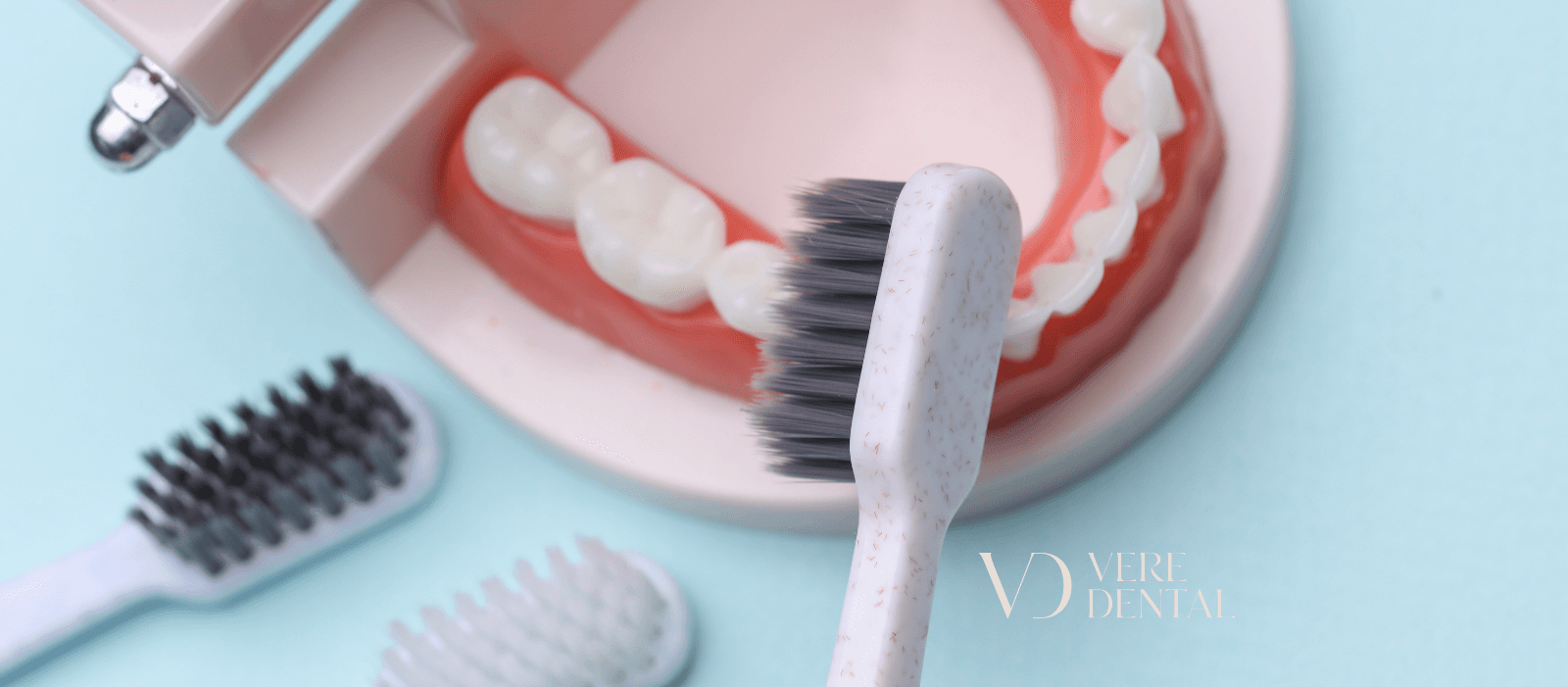
The Brushing Routine for the School Year
Once the school year starts, mornings get rushed and evenings get tired—exactly when brushing slips. The habits that stick:
- Brush twice a day, two minutes, last thing at night and one other time. The night-time brush is the one that matters most: saliva flow drops during sleep, so the teeth are at their most vulnerable overnight. For bad bacteria, that makes the mouth an “all you can eat buffet” if your child’s teeth aren’t brushed
- Use a fluoride toothpaste. For children under three, a smear; from three to six, a pea-sized amount; from around six, most children can move to a family toothpaste. Let them brush, then finish it yourself until they are around seven—their fine motor control gets there before their honesty does.
- “Spit don't rinse”. Leaving the residue of fluoride toothpaste on the teeth gives the protection time to work.
- Consider a timer or a song. Two minutes feels long to a six-year-old. Anything that makes it a game, wins.
For older children, September is also a good moment to introduce the idea of interdental cleaning—if and when their dentist says their teeth need it.
Big Teeth, Big Changes: What We Watch for at School Age
Between about six and twelve, your child's mouth is a building site: baby teeth falling out, adult teeth coming through, and the bite settling into its final shape. A check-up during these years is not only about decay. We are also watching:
Crowding and spacing, as the adult teeth arrive
Crossbites, overbites and underbites that are far simpler to influence early
Whether a referral is needed. We have relationships with specialist orthodontic and paediatric clinics, so if your child needs care beyond general dentistry, we will point you to the right people at the right time—no waiting until the problem has grown.
Sports Mouthguards for School Sport
This is also the age when a knock at netball or a fall in the playground matters. If a tooth gets chipped or knocked, call us the same day: quick action can save a tooth that would otherwise be lost.
Ask us too about a sports mouthguard if your child plays hockey, rugby, football or martial arts.
Nervous Children (and Nervous Parents)
Some children are confident in the chair by their third birthday. Others take much longer, and both are completely normal.
A few things that help:
- Book a time when they are fresh, not straight after school or during the after-school slump
- Tell them the truth: the dentist counts and brushes your teeth, and nothing happens without them knowing what it is
- Avoid the words "it won't hurt"—it introduces the idea that it might
- Let them bring a comfort object, and a sibling or parent in the room is always welcome
- Praise the visit, not the outcome. Sitting in the chair and having a look counts as a triumph if that is where your child is today.
At Vere Dental, visiting the dentist should feel restorative—a calm moment in the day, not something to get through. We take nervous patients of every age seriously, and that includes four-year-olds. Oral Health Foundation has excellent free resources for children too, if you would like something to read together before a visit.

Popular Questions
My child has no pain. Do they still need a check-up?
Yes—and this is precisely why. Decay in children's teeth often causes no pain until it is advanced. A check-up finds things while they are still simple (and inexpensive) to treat and keeps the visits positive rather than emergent.
My child's baby teeth will fall out anyway. Do they matter?
Absolutely. Baby teeth guide the adult teeth into position, support speech and eating, and decay in baby teeth can affect the teeth developing underneath. They are also where your child learns that the dentist is nothing to fear.
How much does a children's check-up cost?
We are a fully private, family-owned practice, and children's examination fees are on our fee guide. Families often book children's checks alongside their own appointments—conveniently, in one trip.
Can my child see the same dentist every time?
Usually this is possible, but it might not always be possible. If that is the case, we will inform you. Children do best with a familiar face, and you are always welcome to request a particular practitioner when you book.
Do you see the whole family?
We do—our team cares for every member of the family, from the youngest to the very oldest. Many of our families have been with us for years, and the children who started with us as babies are now bringing in their own check-up reminders.

Book your child’s Check
The school year is here—give your child's smile the same head start as the rest of their kit. Book a back-to-school dental check at our Battersea practice, on our bookings page or by calling 020 4505 6446.
We serve families across Battersea, Nine Elms, Vauxhall, Chelsea, and further too, with early and flexible appointment times to fit around the school run.


_1778164446851.JPG&w=3840&q=75&dpl=dpl_EwDSwCtuPZoyUgCu5m3Q6z1dBt5z)